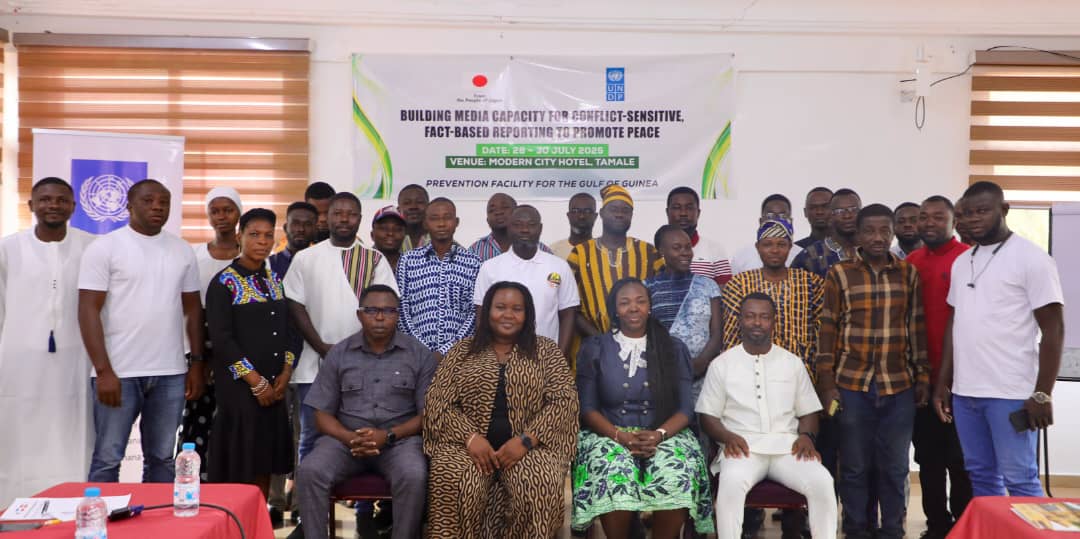
The United Nations Development Programme(UNDP) organised a two-day intensive workshop to train about 25 journalists and bloggers across four regions in Northern Ghana under the flagship project “Preventive Approach to Protecting Development in the Gulf of Guinea (Prevention Facility)”.
The two day intensive training workshop held on 28th to 30th July, 2025 at Tamale Modem City Hotel by UNDP on the theme; ”Capacity Building to Enhance the Media’s Role in Fact-Based Conflict-Sensitive Reporting and Information Hygiene for Peace”.
The training focused on raising awareness on Fact-checking and conflict-sensitive reporting to disseminate positive counter-messages, prevent escalation of conflicts, while promoting social cohesion, peace and stability in the country for journalists as key players in the effort to promote a fact-based public discourse.
Mrs. Melody Azinim, Peace and Governance Programme Analyst (UNDP), in her address, highlighted the role of journalists in nation-building and therefore urged professionalism in reporting to combat information disorder.
She also focused on the responsibilities of journalists to be accountable and truthful in reporting to avoid misleading content and violence.
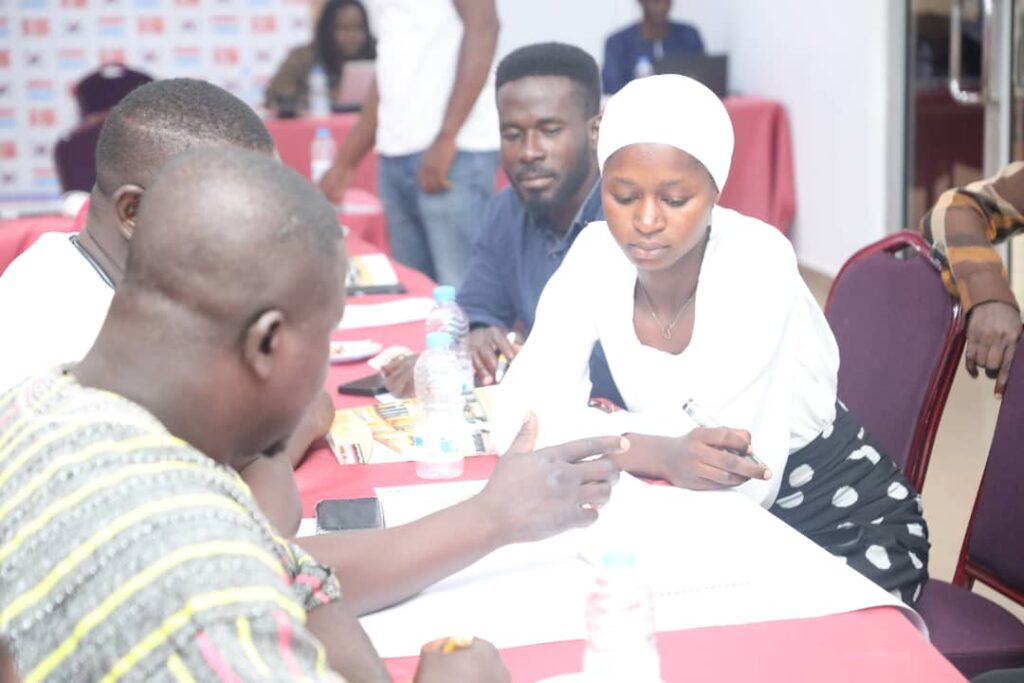
The project is funded by the government of Japan to train journalists and bloggers on the capacity to build to enhance the media’s role in fact-based conflict-sensitive reporting and information hygiene for peace.
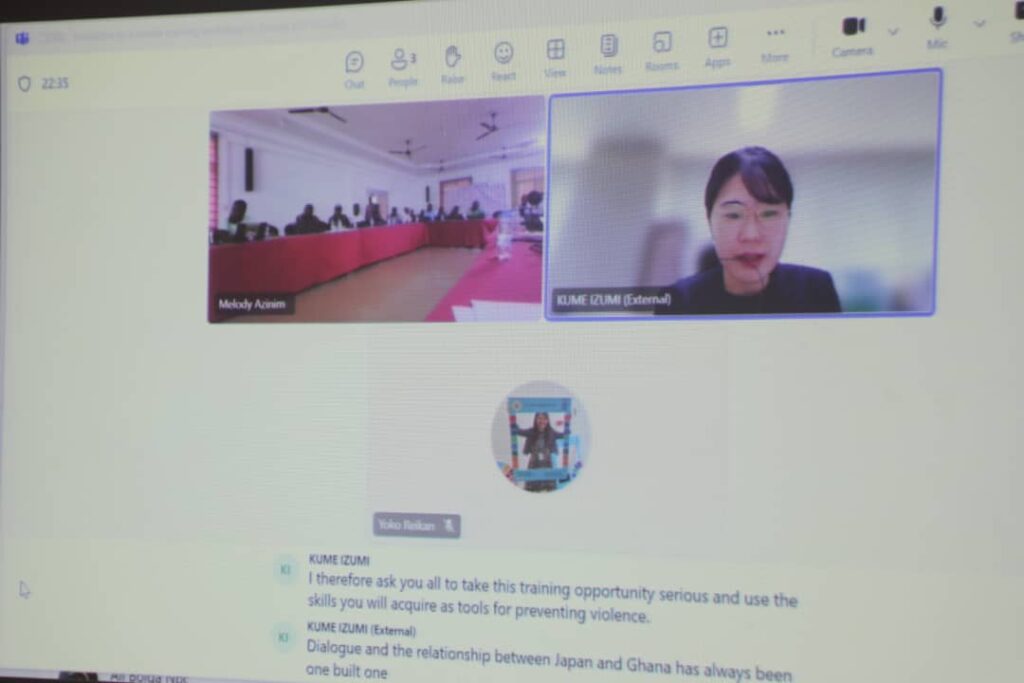
Speaking with Kume Izumi, a representative from the embassy of Japan via Zoom, she acknowledged the importance of the project and the training, encouraging all participants to actively take part to achieve the aim of the project.
“Some of this AI-generated news is sometimes indistinguishable from real content and increases the speed and scale at which false news spreads, she said.
Stressing the role of journalists in combating misinformation and manipulated content. Mr. Eugene Yirbour, Senior Conflict Advisor and Acting Office Director of the Democracy Rights and Governance Officer USIAD, emphasised on conflict-sensitive reporting and the role of journalists to prevent conflict through fact-based reporting, proper channelling of communication and education.
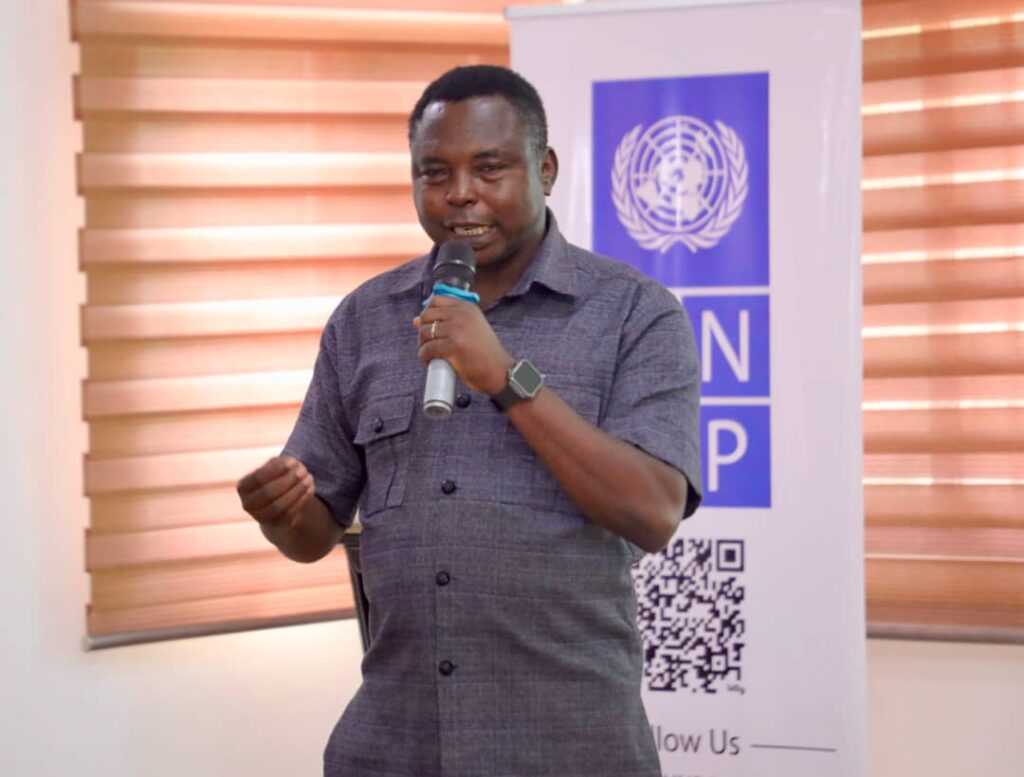
He also outlined the guidelines for effective conflict reporting to prevent violence and tensions. “Through accuracy and impartiality, avoiding stereotypes, Fact-checking and dialogue”, he stated.
He also focused on measures to prevent violent extremism and the role of media in the negative narrative in labelling the Fulbe.
He acknowledged trainees on the need for social cohesion among Fulbe’s in the communities.
Miss. Roselena Ahiable, project Manager, DUBAWA West Africa, also focused on information disorder, Fact-checking, and verification tools.
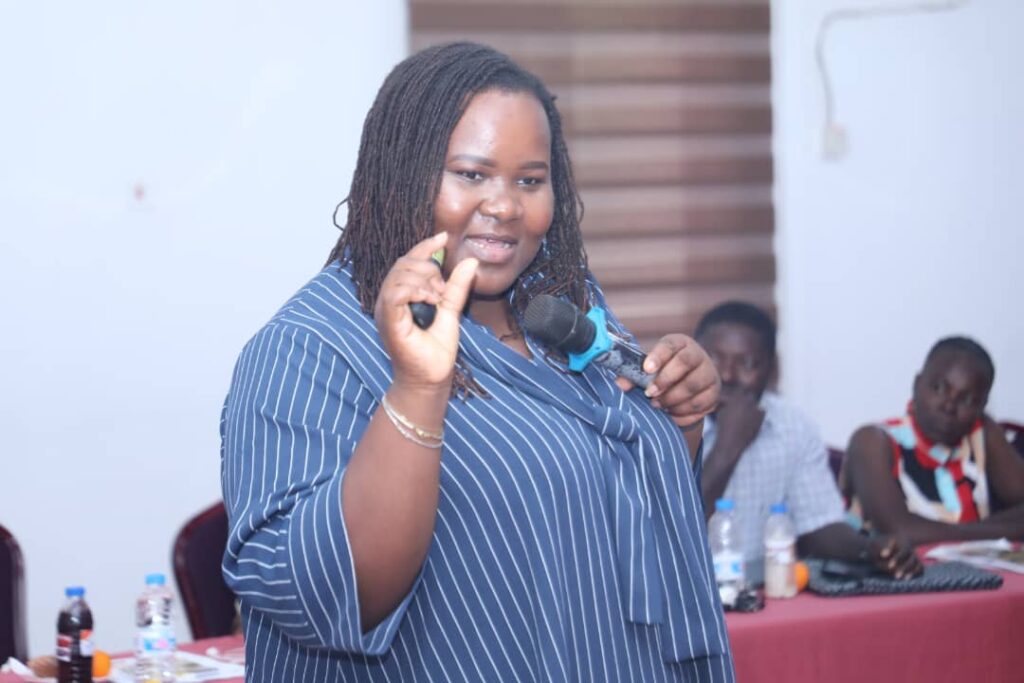
She exposed journalists to digital verification tools and how to critically identify flaws in manipulated content in an intensive practical session.
This session equipped journalists with new skills on how to verify information (images and videos) using digital tools like Google Fact-check Explorer, Reverse image search, Tineye, Yandex, inVid and WayBack Machine.
This Programme not only trained journalists on conflict-sensitive reporting and Fact-checking, but it also had a great impact on journalists in the prevention of conflicts from escalation, peace building, promoting social cohesion and stability in the country.
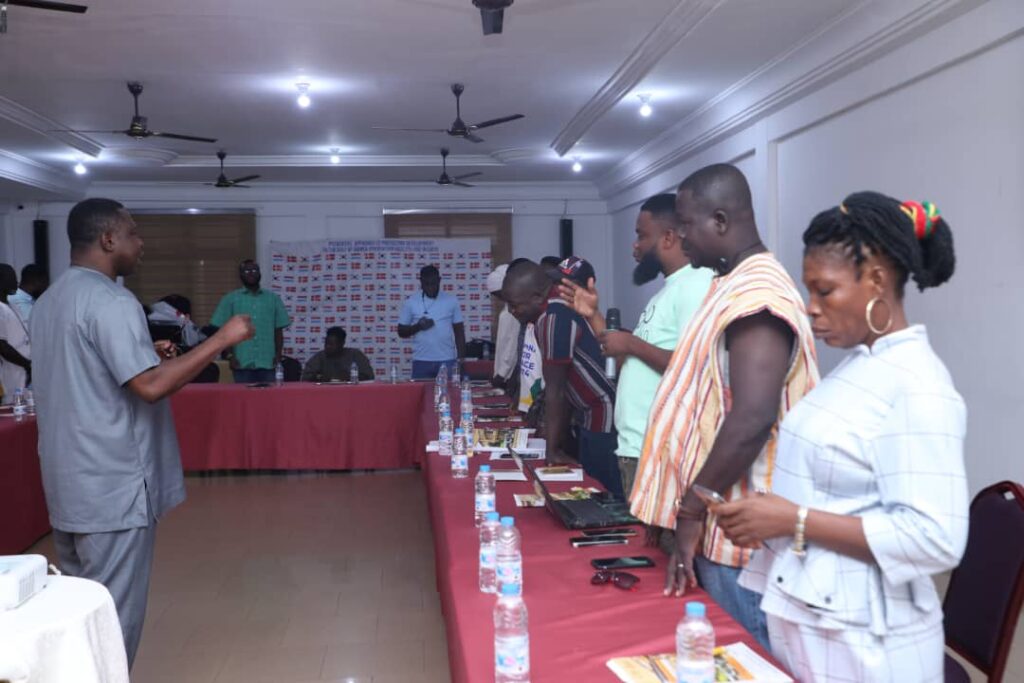
Source: Gwollu FM 91.7MHZ




https://shorturl.fm/FuBNC